
Understanding Ekadashi Types
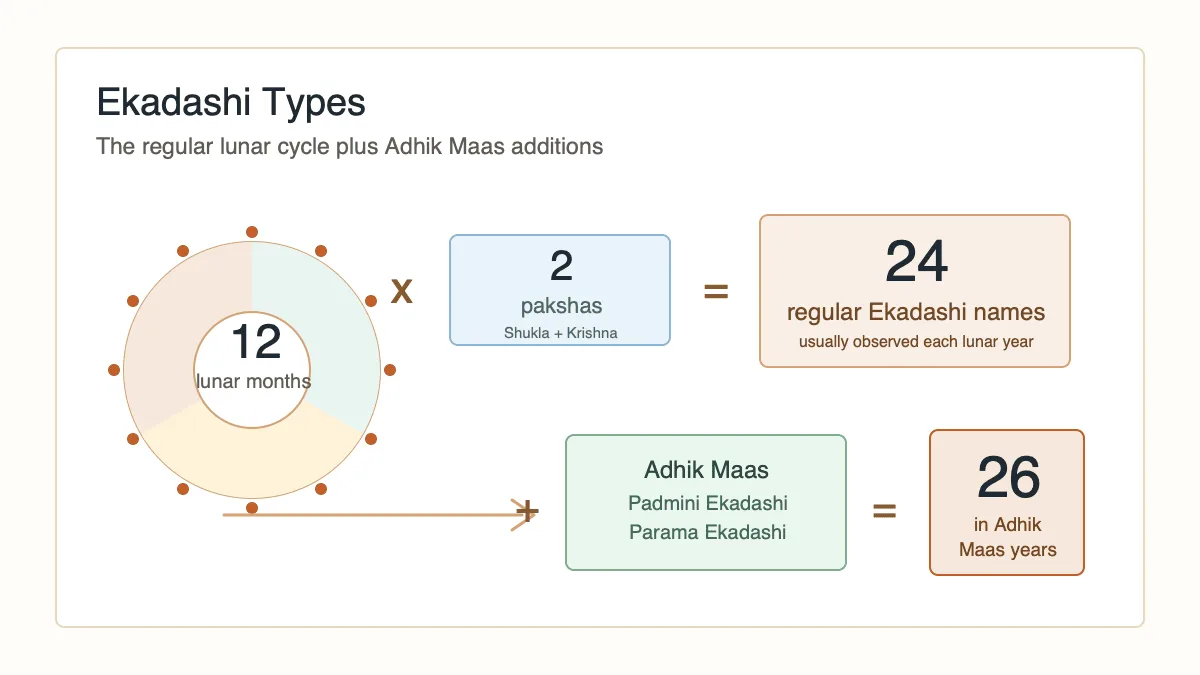
A normal Hindu lunar year has 24 regular Ekadashi observances: one in Shukla Paksha and one in Krishna Paksha for each of the 12 lunar months.
Months here are named by the purnimanta calendar (months end at full moon), used in most of north India. In the amanta calendar (months end at new moon), used in Maharashtra, Gujarat, Karnataka, Andhra Pradesh and Telangana, every Shukla Paksha Ekadashi has the same month, and every Krishna Paksha Ekadashi falls in the month before: the Krishna Ekadashi of purnimanta Shravana is that of amanta Ashadha. Adhik Maas has the same name in both.
When Adhik Maas, also called Purushottam Maas, occurs, two additional observances appear: Padmini Ekadashi and Parama Ekadashi. That is why some years have 26 Ekadashi fasting dates instead of the usual 24; the Adhik Maas page shows the count HinduLab calculates for each published year.
Each Ekadashi has its own vrat katha, ritual focus, and traditional benefits. Alternate names such as Vaikuntha, Mukkoti, Prabodhini, Devutthana, Parsva, Parivartini, Saphala, and Safala are shown as aliases where they refer to the same canonical observance.
Calendar model
24 regular names, 2 Adhik Maas names
The regular cycle is built from 12 lunar months and 2 pakshas. Adhik Maas is a calendar adjustment month, so Padmini and Parama are added only in those years.
24
Regular Names
2
Adhik Maas
24
Usually Per Year
26
Adhik Maas Years
Complete List of Ekadashi Types
Kamika Ekadashi
Kamika Ekadashi falls in the dark half of Shravana. The Padma Purana praises worship of Vishnu with Tulasi and lamps on it.
Shravana Putrada Ekadashi
Shravana Putrada Ekadashi is observed during Shukla Paksha of Shravana month and is particularly beneficial for couples seeking children.
Aja Ekadashi
Aja Ekadashi falls in the dark half of Bhadrapada. Its Padma Purana katha tells how the vow ended King Harishchandra's long servitude and restored his family.
Parsva Ekadashi
Parsva Ekadashi falls in Shukla Paksha of Bhadrapada, when tradition holds that Vishnu turns on his side in his Chaturmas sleep. The Padma Purana calls it Padma.
Indira Ekadashi
Indira Ekadashi falls in the dark half of Ashwin, during Pitru Paksha. Its Padma Purana katha tells how the vow sent King Indrasena's father from Yama's realm to heaven.
Papankusha Ekadashi
Papankusha Ekadashi is observed during Shukla Paksha of Ashwin month. The Padma Purana calls it the remover of all sins, a day to worship Vishnu as Padmanabha.
Rama Ekadashi
Rama Ekadashi falls in the dark half of Kartik. Its name is Ramā, a name of the goddess Lakshmi, not Lord Rama; the day is kept for Vishnu, like every Ekadashi.
Devutthana Ekadashi
Devutthana or Prabodhini Ekadashi, in the bright half of Kartika, is the day Vishnu wakes from his four-month sleep, ending Chaturmas in most calendars.
Utpanna Ekadashi
Utpanna Ekadashi falls in Krishna Paksha of Margashirsha. Its Padma Purana chapter tells how Ekadashi was born from Vishnu's splendour to slay the demon Mura.
Mokshada Ekadashi
Mokshada Ekadashi falls in the bright half of Margashirsha. In the Padma Purana no Ekadashi gives liberation more surely, and its merit frees a king's ancestors.
Saphala Ekadashi
Saphala Ekadashi falls in the dark half of Pausha. Its Padma Purana katha tells how the outcast prince Lumpaka kept the vow without knowing it and regained his kingdom.
Putrada Ekadashi
Pausha Putrada Ekadashi falls in Shukla Paksha of Pausha and is kept by couples praying for a child. Its katha is of King Suketumat and Queen Campaka.
Shattila Ekadashi
Shattila Ekadashi involves the sacred use of sesame seeds in six different ways for purification and spiritual benefits.
Jaya Ekadashi
Jaya Ekadashi falls in the bright half of Magha. The Padma Purana tells how it freed two gandharvas from Indra's curse, and says it removes even the gravest sins.
Vijaya Ekadashi
Vijaya Ekadashi falls in the dark half of Phalguna. In the Padma Purana, the sage Bakadalbhya teaches Rama this vow before he crosses the ocean to Lanka.
Amalaki Ekadashi
Amalaki Ekadashi, in the bright half of Phalguna, is kept beside the amalaki (amla) tree, which the Padma Purana calls dear to Vishnu and home to all the gods.
Papmochani Ekadashi
Papmochani Ekadashi falls in Krishna Paksha of Chaitra. Its Padma Purana katha tells how the vow freed the sage Medhavin and the nymph Manjughosha from sin and a curse.
Kamada Ekadashi
Kamada Ekadashi falls in the bright half of Chaitra. Its Padma Purana katha tells how Lalitā's vow freed her husband, the gandharva Lalita, from a demon's form.
Varuthini Ekadashi
Varuthini Ekadashi falls in Krishna Paksha of Vaishakha. The Padma Purana praises it for good fortune, freedom from sin and release from rebirth.
Mohini Ekadashi
Mohini Ekadashi falls in the bright half of Vaishakha. In the Padma Purana it frees one from the noose of delusion (moha), as it freed Dhrishtabuddhi.
Nirjala Ekadashi
Nirjala Ekadashi is the most challenging of the commonly observed Ekadashis, traditionally involving complete abstinence from food and water by healthy and prepared devotees.
Yogini Ekadashi
Yogini Ekadashi falls in Krishna Paksha of Ashadha. Its Padma Purana katha tells how the vow healed Hemamalin, whom Kubera had cursed with leprosy.
Devshayani Ekadashi
Devshayani Ekadashi marks the beginning of Chaturmas when Lord Vishnu enters cosmic sleep, initiating four months of intensive spiritual practice.
Apara Ekadashi
Apara Ekadashi falls in the dark half of Jyeshtha. In the Padma Purana it gives unending fruit and frees even those guilty of grave wrongs from their sin.
Padmini Ekadashi
Padmini Ekadashi is the Shukla Paksha Ekadashi of Adhik Maas or Purushottam Maas, observed only in years with the extra lunar month.
Parama Ekadashi
Parama Ekadashi is the Krishna Paksha Ekadashi of Adhik Maas or Purushottam Maas and appears only in years with the extra lunar month.
Most Popular Ekadashis
Nirjala Ekadashi
The most challenging and meritorious Ekadashi involving complete abstinence from food and water.
Learn More →Devshayani Ekadashi
Marks the beginning of Chaturmas when Lord Vishnu enters his cosmic sleep for four months.
Learn More →Putrada Ekadashi
The supreme Ekadashi for blessing childless couples with children and family prosperity.
Learn More →Quick Reference by Purpose
For Specific Desires
- Children: Putrada, Shravana Putrada Ekadashi
- Victory: Jaya, Vijaya Ekadashi
- Wish Fulfillment: Kamada, Kamika Ekadashi
- Protection: Varuthini Ekadashi
- Success: Saphala Ekadashi
For Spiritual Growth
- Liberation: Mokshada, Papmochani Ekadashi
- Sin Removal: Papankusha, Papmochani Ekadashi
- Wisdom: Mohini, Aja Ekadashi
- Spiritual Powers: Yogini Ekadashi
- Ancestors: Indira Ekadashi